
When someone has cancer or a serious illness, the most comforting words are usually simple, honest, and focused on being present, not promising that everything will be okay.
“Get well soon” often doesn’t fit here. Recovery may not be soon, or certain, and that phrase can feel hollow even when it’s well meant.
Comforting words for someone with cancer or a serious illness are meant to offer presence, not solutions. They acknowledge how hard this is, avoid minimizing it, and remind the person they’re not alone, without promising outcomes no one can guarantee.
What do you say to someone with cancer instead of “get well soon”? Try something rooted in the present, like “I’m thinking of you today” or “I don’t know what to say, but I’m here.” These don’t require the illness to have a certain outcome, they just offer company in an uncertain time.
Each message here is written with care and reviewed for tone, clarity, and sensitivity. The goal is supportive words without medical claims, without minimizing someone’s experience, and without creating pressure to stay positive.
Messages of Presence and Love
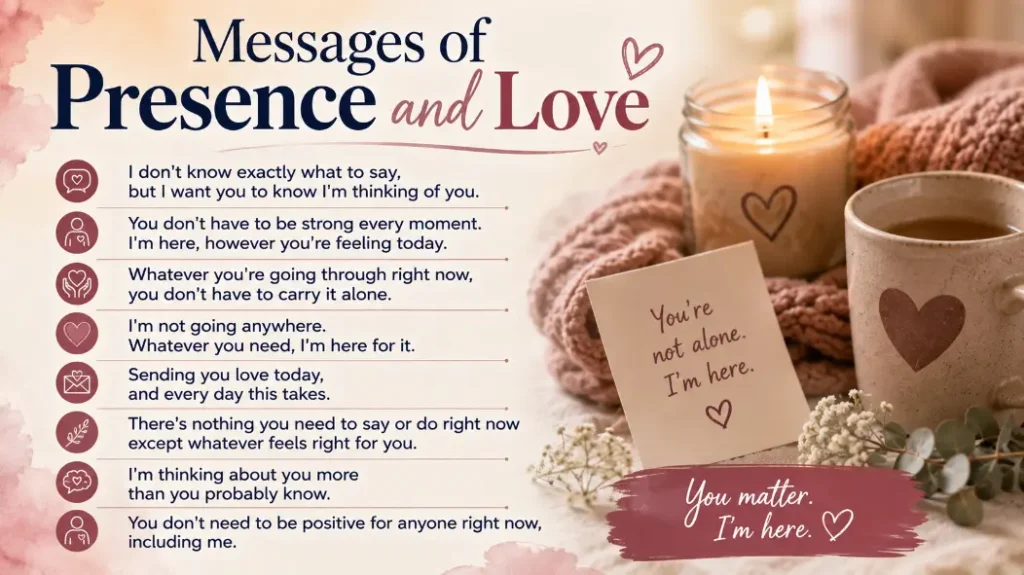
- I don’t know exactly what to say, but I want you to know I’m thinking of you.
- You don’t have to be strong every moment. I’m here, however you’re feeling today.
- Whatever you’re going through right now, you don’t have to carry it alone.
- I’m not going anywhere. Whatever you need, I’m here for it.
- Sending you love today, and every day this takes.
- There’s nothing you need to say or do right now except whatever feels right for you.
- I’m thinking about you more than you probably know.
- You don’t need to be positive for anyone right now, including me.
- I’m here for the hard days too, not just the easier ones.
Messages That Don’t Minimize What They’re Facing
- This is a lot to carry, and I’m so sorry you’re carrying it.
- I can’t imagine how hard this is, and I’m not going to pretend I do.
- You’re allowed to feel however you feel about this. No pressure to be okay.
- I won’t pretend to have the right words. I just want you to know I care.
- This is scary, and it’s okay to say that out loud. I’m listening.
- I’m not expecting anything from you right now except being exactly where you are.
- Whatever this day looks like for you, I’m thinking of you in it.
What Not to Say (And What to Say Instead)
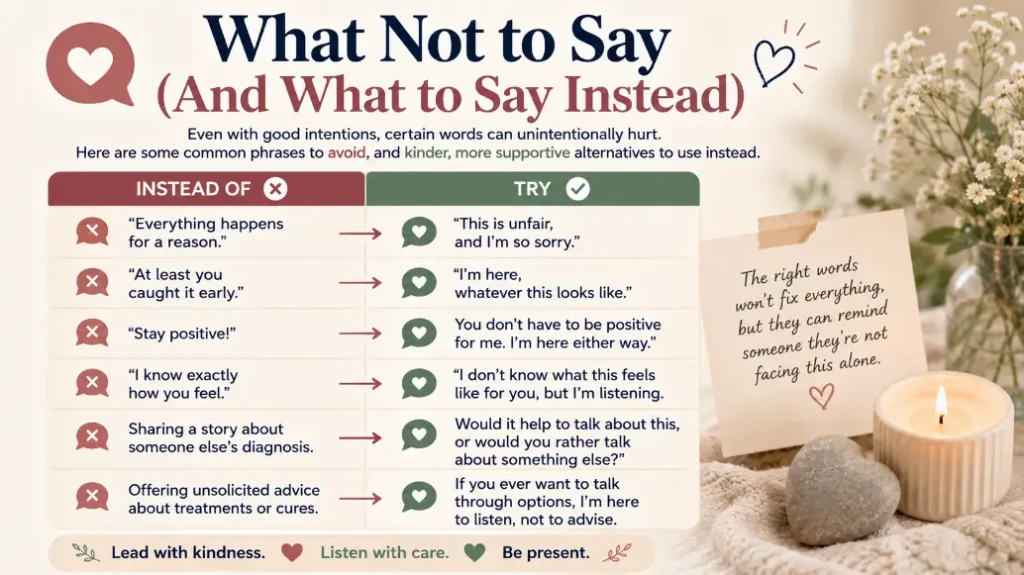
A few common phrases tend to land wrong, even when they come from a caring place. Here’s what to reach for instead.
Instead of: “Everything happens for a reason.”
Try: “This is unfair, and I’m so sorry.”
Instead of: “At least you caught it early.”
Try: “I’m here, whatever this looks like.”
Instead of: “Stay positive!”
Try: “You don’t have to be positive for me. I’m here either way.”
Instead of: “I know exactly how you feel.”
Try: “I don’t know what this feels like for you, but I’m listening.”
Instead of: sharing a story about someone else’s diagnosis
Try: asking, “Would it help to talk about this, or would you rather talk about something else?”
Instead of: offering unsolicited advice about treatments or cures
Try: “If you ever want to talk through options, I’m here to listen, not to advise.”
Short Messages for a Text or Card
- Thinking of you today.
- Sending you love and strength.
- I’m here, whatever you need.
- You’re not alone in this.
- Holding you close in my thoughts.
- No pressure to respond, just wanted you to know I care.
- You matter to me, today and always.
Messages for a Friend

- You’ve always shown up for me. I’m not going anywhere, no matter what this looks like.
- I don’t have the right words, but I have all the time you need, whenever you want to talk or not talk at all.
- Whatever this week looks like for you, I’m one text away.
- I’ll bring dinner Thursday, no need to plan anything.
- I’m happy to drive you to your next appointment if that would help.
- You don’t have to perform okay for me. I’ll take however you actually are.
- I’m thinking of you constantly. Please let me know if there’s anything, big or small, I can do.
Messages for a Family Member

- I love you, and I’m not going anywhere through any of this.
- You’ve spent your whole life showing up for this family. Let us show up for you now.
- Whatever you need, however you need it, I’m here.
- This is hard, and I’m not going to pretend otherwise. I love you.
- I’ll help however you need, whether that’s errands, rides, or just company.
- You don’t have to be strong for us. We just want to be here for you.
Longer Messages of Support
- I’ve been thinking about you constantly since I found out. I don’t have the perfect words, and I’m not going to pretend I know exactly what you’re feeling. What I do know is that you don’t have to go through this alone, and I’m not going anywhere. Whatever you need, whenever you need it, I’m here.
- There’s nothing easy about what you’re facing, and I won’t pretend otherwise. But I want you to know how loved you are, and how many people are standing behind you right now, even on the days it might not feel that way. Take whatever this needs to look like, one day at a time. I’m here for all of it.
Faith-Based Messages, Offered Gently
- Holding you in prayer today, and trusting you’re held even when it’s hard to feel it.
- Praying for comfort and strength for you, whatever today brings.
- Sending prayers for peace, for you and everyone walking through this with you.
- May you feel less alone today, surrounded by love and prayer.
What to Write in a Card
Cards give you room to be honest rather than falsely upbeat: “I don’t know exactly what to say, but I want you to know I’m thinking of you. I’m here, whatever you need.”
For a text, shorter and simpler usually works better than a long message: “Thinking of you today. No pressure to respond.”
Quick Guide: Choosing the Right Message
| Situation | What to Focus On |
|---|---|
| Close friend | Presence and specific offers to help |
| Family member | Love and steady reassurance |
| Someone recently diagnosed | Acknowledging it’s hard, not offering solutions |
| Someone mid-treatment | Short, low-pressure check-ins |
| Card | Honest, not overly cheerful |
| Text | Brief, with no pressure to reply |
Why Trust This Guide
Each message here has been written and reviewed for tone, clarity, and sensitivity.
The goal is to offer supportive words without making medical claims or minimizing someone’s experience.
FAQ Section
What do you say to someone with cancer instead of “get well soon”? Try something present-focused, like “I’m thinking of you today” or “I’m here, whatever you need.” These don’t rely on a specific outcome or timeline.
What should you avoid saying to someone with a serious illness? Avoid phrases like “everything happens for a reason,” “at least you caught it early,” or “stay positive.” These can unintentionally minimize what they’re going through.
Is it okay to say “you’re so strong” to someone with cancer? Use it sparingly. While well-intentioned, it can create pressure to always seem strong. Pairing it with permission, like “you don’t have to be strong for me,” softens that pressure.
Should I post about a loved one’s cancer on social media? Only with their permission. A cancer diagnosis is deeply personal, and many people prefer to control who knows and when. Ask first.
What if I don’t know what to say at all? It’s okay to say that directly. “I don’t know what to say, but I wanted you to know I’m thinking of you” is honest and often lands better than a forced, cheerful message.
Can these messages be personalized? Yes. Add specifics about your relationship or a genuine offer to help, but avoid comparisons to anyone else’s experience with illness.
Conclusion
There’s no perfect message for someone facing cancer or a serious illness, and trying to find one shouldn’t stop you from reaching out.
This guide focused on presence over platitudes, honesty over forced positivity, and simple words that acknowledge how hard this is without pretending to have answers.
The most important thing isn’t saying the exact right thing, it’s saying something, and meaning it.