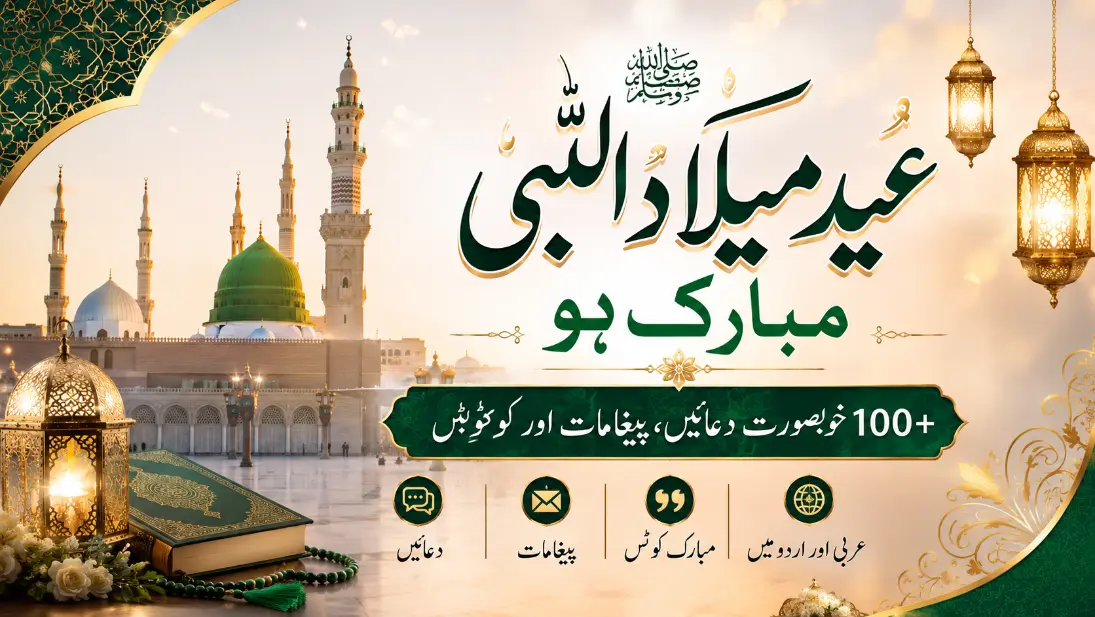
100+ Wishes & Messages in English, Arabic, and Urdu
Eid Milad-un-Nabi, also known as Mawlid al-Nabi, marks the occasion Muslims set aside to reflect on the birth and life of Prophet Muhammad ﷺ during the month of Rabi ul Awwal.
This guide brings together more than 100 Eid Milad-un-Nabi wishes, messages, and Mubarak quotes you can send to family, friends, and loved ones, along with Arabic and Urdu greetings and short WhatsApp status lines.
You will also find helpful context on what this occasion means and why Rabi ul Awwal holds such significance for Muslims around the world.
Eid Milad-un-Nabi is widely observed on 12 Rabi ul Awwal in many Muslim communities, although historical sources differ on the exact birth date. It is a time of reflection on the life and teachings of Prophet Muhammad ﷺ, marked with wishes, gatherings, and remembrance, though practices vary between communities.
Eid Milad-un-Nabi ﷺ Ki History Aur Ahmiyat
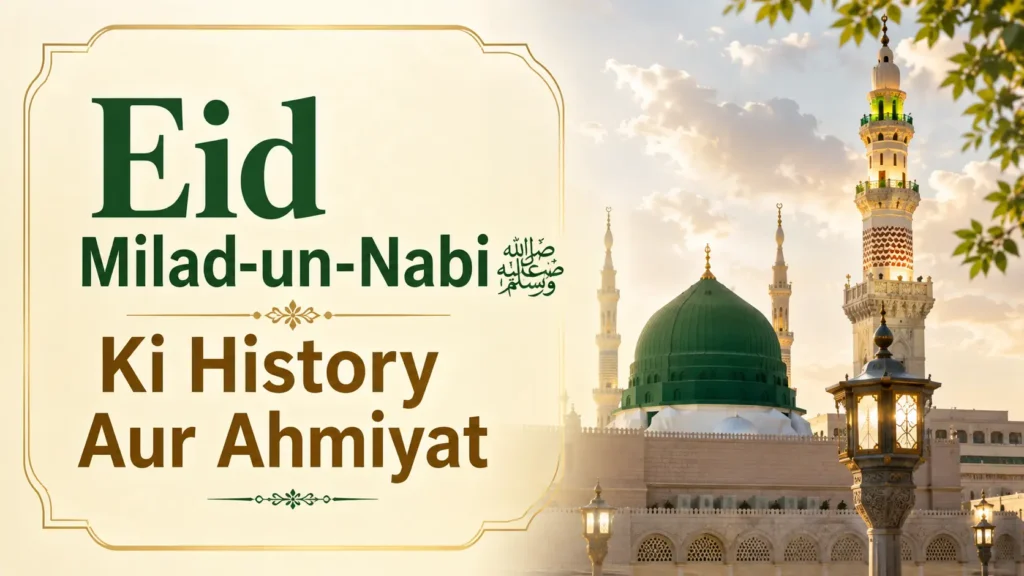
Eid Milad-un-Nabi ﷺ is a time when Muslims remember the birth, life, character, and teachings of Prophet Muhammad ﷺ. It is observed during Rabi-ul-Awwal, the month associated with the life of the beloved Prophet ﷺ. For many Muslims, this occasion is a reminder to learn about his Seerah and reflect on the values he taught.
The life of Prophet Muhammad ﷺ offers guidance on honesty, patience, mercy, justice, forgiveness, and kindness. Remembering his Seerah can help Muslims reconnect with these values and think about how they can bring them into their everyday lives.
Eid Milad-un-Nabi ﷺ is therefore meaningful not only as an occasion of remembrance, but also as an opportunity to learn from the Prophet’s ﷺ character. Families and communities may use this time to read about his life, share beneficial reminders, send respectful greetings, and encourage one another to follow good Islamic values.
Eid Milad-un-Nabi ﷺ Ki Fazilat Aur Khushiyan
Eid Milad-un-Nabi ﷺ is associated with love and respect for Prophet Muhammad ﷺ. Many Muslims mark the occasion by remembering his Seerah, sending Durood-o-Salam, listening to or reciting Naat, and sharing Islamic reminders with family and friends.
The happiness of the occasion can also be expressed through good deeds. Helping someone in need, giving charity, visiting family, showing kindness, and making peace with others are meaningful ways to turn a celebration into an opportunity for positive action.
The most lasting benefit of remembering the Prophet ﷺ is to reflect on his teachings beyond a single occasion. His life teaches Muslims to treat others with mercy, speak truthfully, show patience, forgive when possible, and maintain good character.
Because Muslims and scholars may differ on certain practices associated with Milad, it is wise to approach the subject respectfully and follow reliable Islamic guidance from trusted scholars.
12 Rabi-ul-Awwal Ko Kya Karna Chahiye?
12 Rabi-ul-Awwal is an important date for many Muslims who use the occasion to remember Prophet Muhammad ﷺ and learn more about his blessed life. Practices can vary among Muslim communities, so people may observe the day according to their religious tradition and trusted scholarly guidance.
Some meaningful activities may include reading the Quran, learning about the Seerah of Prophet Muhammad ﷺ, sending Durood-o-Salam, reciting or listening to Naat, making dua, and reflecting on the Prophet’s ﷺ teachings.
It can also be a good time to teach children about the Prophet’s ﷺ kindness, honesty, patience, mercy, and respect for others. Families can read a short Seerah lesson together and discuss how those qualities can be practiced in daily life.
Helping people in need, giving charity, sharing food, and showing kindness to others can also make the occasion meaningful. The focus should remain on sincere worship, good character, remembrance, and learning.
Since there are different scholarly opinions about specific practices on 12 Rabi-ul-Awwal, readers should follow the guidance of qualified and trusted scholars within their own tradition.
Naat, Durood Aur Salam: Eid Milad-un-Nabi ﷺ Par Kya Padhein?
Naat, Durood-o-Salam, and Seerah-related reading are commonly associated with gatherings held to remember Prophet Muhammad ﷺ. They allow people to express love and respect while reflecting on the Prophet’s ﷺ life and teachings.
Durood-o-Salam holds an important place in Islamic practice. Muslims can spend time sending blessings upon the Prophet ﷺ and remembering the guidance he brought. Reading authentic accounts from his Seerah can also help turn remembrance into meaningful learning.
Naat can be shared or recited respectfully, particularly when it focuses on praising the Prophet ﷺ without making claims that conflict with Islamic teachings. Families can also use the occasion to share short and respectful messages with loved ones.
For example:
“Eid Milad-un-Nabi ﷺ Mubarak! May Allah help us follow the beautiful teachings and Sunnah of Prophet Muhammad ﷺ and fill our lives with kindness, patience, and peace.”
A simple greeting can carry a meaningful reminder when it encourages love for the Prophet ﷺ and good character.
Nabi Muhammad ﷺ Ki Seerat Aur Islam Ke Liye Aap ﷺ Ka Paigham
The Seerah of Prophet Muhammad ﷺ provides Muslims with guidance about faith, character, relationships, and responsibility. His message called people toward the worship of Allah and encouraged them to live with truthfulness, justice, compassion, and good character.
Prophet Muhammad ﷺ showed the importance of honesty and trust. He taught people to care for parents, neighbors, relatives, the poor, and those who needed help. His life also demonstrated patience during hardship and forgiveness when dealing with others.
Another important lesson from the Prophet’s ﷺ life is that faith should influence character and everyday behavior. Kindness toward others, keeping promises, speaking truthfully, helping people, and avoiding injustice are values that remain relevant in every generation.
Learning about the Seerah can therefore help Muslims understand Islam not only through words, but also through the example of the Prophet ﷺ. His life provides a practical model of mercy, patience, courage, humility, and service to others.
Nabi Muhammad ﷺ Ki Fazilat Aur Ummat Ke Liye Rehmat
Prophet Muhammad ﷺ holds a unique and honored position in Islam. Muslims love and respect him as the final Messenger of Allah and look to his teachings and Sunnah for guidance.
The Quran describes the Prophet ﷺ as a mercy to the worlds. His life reflects mercy through the way he treated people, taught his companions, helped those in difficulty, and encouraged forgiveness and compassion.
The Prophet ﷺ also taught Muslims the importance of good character. His example encourages believers to be honest, patient, trustworthy, gentle, and fair. These qualities are part of the reason Muslims continue to study his Seerah and Sunnah.
For Muslims, love for Prophet Muhammad ﷺ is connected with learning his teachings and respecting his guidance. Sending Durood-o-Salam, studying his Seerah, and trying to follow his Sunnah can all serve as reminders of his example.
When discussing the virtues of the Prophet ﷺ, it is important to rely on the Quran and authentic Hadith and avoid unsupported stories or exaggerated claims. This keeps religious content respectful, accurate, and trustworthy.
Nabi Muhammad ﷺ Ki Sunnah Se Humein Kya Seekhna Chahiye?
The Sunnah of Prophet Muhammad ﷺ offers practical lessons that Muslims can apply throughout their lives. These lessons are not limited to a particular month or occasion, which makes learning from the Sunnah an important part of everyday life.
Sachai aur Amanatdari: The Prophet ﷺ was known for truthfulness and trustworthiness. Muslims can follow this example by being honest in their words, promises, and dealings.
Sabr aur Himmat: Life includes difficulties and challenges. The Prophet’s ﷺ example teaches patience, perseverance, and trust in Allah during hard times.
Rehmat aur Kindness: Treating people with compassion is an important lesson from the Prophet’s ﷺ character. A kind word, helpful action, or act of forgiveness can make a real difference.
Walidain Ka Ehtram: Respecting and caring for parents is an important Islamic value. The Prophet ﷺ emphasized good treatment of parents and family members.
Padosiyon Aur Doosron Ka Khayal: Muslims are encouraged to treat neighbors and other people with consideration and respect, regardless of their background.
Zaruratmandon Ki Madad: Helping people who are struggling is another valuable lesson. Charity, sharing food, offering support, or simply being there for someone can reflect compassion in action.
Achha Akhlaq: Good character is one of the most important lessons Muslims can take from the Prophet’s ﷺ life. Patience, humility, forgiveness, respect, and kindness can improve both personal relationships and the wider community.
Remembering Prophet Muhammad ﷺ becomes even more meaningful when his teachings inspire positive changes in everyday life. Eid Milad-un-Nabi ﷺ can be a reminder to learn from his Seerah, appreciate his message, and strive to bring the values of his Sunnah into our daily actions.
Short Eid Milad-un-Nabi Wishes
- Eid Milad-un-Nabi Mubarak to you and your family.
- Wishing you peace and blessings this Milad-un-Nabi.
- Mawlid Mubarak. May your heart find peace today.
- A blessed Rabi ul Awwal to you and yours.
- Eid Milad Mubarak. Stay blessed always.
- Sending you warmth and light this Mawlid.
- Milad-un-Nabi Mubarak. Peace be with your home.
- Wishing you a meaningful Rabi ul Awwal.
- Eid Milad-un-Nabi Mubarak, today and always.
- A gentle reminder of mercy this Mawlid season.
- Blessed Milad to you and your loved ones.
- Eid Milad Mubarak. Keep his teachings close.
- Wishing your family light and love this Mawlid.
- Milad-un-Nabi Mubarak. May peace find you.
- A quiet, blessed Rabi ul Awwal to you.
Heart-Touching Eid Milad-un-Nabi Wishes
- On this day, I think of the mercy and patience the Prophet ﷺ showed the world, and I hope his example finds a place in your heart too.
- Some days remind us why kindness still matters. This is one of them. Eid Milad-un-Nabi Mubarak.
- Wishing you a Rabi ul Awwal that softens your heart and renews your intentions.
- May the remembrance of the Prophet’s ﷺ character bring you comfort during hard seasons and gratitude during good ones.
- There is something grounding about pausing to remember his patience, especially on days when patience feels hard to find.
- Eid Milad-un-Nabi Mubarak. May his mercy toward others remind us how to treat one another.
- This Mawlid, I hope you find a small moment of reflection amid the busyness of everyday life.
- His story is one of quiet strength through hardship. May that strength find its way into your own year.
- Wishing you a Rabi ul Awwal that feels less like routine and more like renewal.
- Some remembrances are loud with celebration, others are quiet with reflection. Either way, may this one reach your heart.
- Eid Milad-un-Nabi Mubarak. May his example of forgiveness soften something in you today.
- May this occasion remind you, as it does me, that character outlasts circumstance.
Eid Milad-un-Nabi Wishes for Family
- Eid Milad-un-Nabi Mubarak to my whole family. May our home always carry his teachings.
- To my parents, thank you for teaching me to love and remember the Prophet ﷺ. Mawlid Mubarak.
- Wishing my family a Rabi ul Awwal filled with gratitude and togetherness.
- Eid Milad Mubarak, dear family. May we grow closer to his example this year.
- To my siblings, may this Mawlid bring our family even closer.
- Wishing my grandparents a peaceful and blessed Milad-un-Nabi.
- Eid Milad-un-Nabi Mubarak to the family that raised me on his teachings.
- May our children grow up knowing the character of the Prophet ﷺ. Mawlid Mubarak, family.
- To my in-laws, wishing you a warm and blessed Rabi ul Awwal.
- Eid Milad Mubarak, family. May our home stay full of remembrance and love.
Eid Milad-un-Nabi Wishes for Friends
- Eid Milad-un-Nabi Mubarak, friend. Wishing you peace this Rabi ul Awwal.
- To my dearest friend, may this Mawlid bring you comfort and clarity.
- Wishing you and your family a blessed Milad-un-Nabi, my friend.
- Eid Milad Mubarak. Grateful to have a friend like you to share this occasion with.
- May this Rabi ul Awwal remind us both to be a little kinder, like he was.
- Mawlid Mubarak, friend. Sending you warmth from my home to yours.
- Eid Milad-un-Nabi Mubarak. Here is to remembering him together, even from a distance.
- Wishing you a reflective and peaceful Mawlid, my friend.
- To a friend who always shows up, Eid Milad Mubarak, and thank you.
- May this Milad-un-Nabi bring you the same peace you bring to those around you.
Islamic Eid Milad-un-Nabi Messages
- May Allah’s peace and blessings be upon the Prophet ﷺ, and may his example guide us always.
- Eid Milad-un-Nabi Mubarak. May we be counted among those who follow his teachings sincerely.
- May this Mawlid renew our love for the Sunnah and our effort to live by it.
- Wishing you a Rabi ul Awwal that strengthens your connection to faith and character.
- May Allah grant us the ability to follow the Prophet’s ﷺ example in our daily lives.
- Eid Milad Mubarak. May his mercy be reflected in how we treat one another.
- May this occasion be a reminder to increase our salawat and remembrance of him.
- Wishing you a Milad-un-Nabi that deepens your faith and softens your heart.
- May Allah bless your home with the peace the Prophet ﷺ brought to the world.
- Eid Milad-un-Nabi Mubarak. May his teachings stay with us long after this day ends.
Eid Milad-un-Nabi Inspirational Quote Ideas
These are original reflective lines, not hadith or direct quotations from the Prophet ﷺ, meant to inspire reflection on his character.
- His character was the living example of everything he taught.
- Mercy was not just his message, it was how he lived.
- To remember him is to remember what patience under hardship looks like.
- Kindness was never a strategy for him, it was simply who he was.
- He led with humility long before he led with authority.
- His forgiveness toward his enemies remains one of history’s quiet lessons.
- He taught that strength and gentleness were never opposites.
- His example still asks us the same question it always has: how do we treat others?
- He showed that leadership could be built on service rather than power.
- His life remains proof that character is the truest legacy.
Eid Milad-un-Nabi WhatsApp Status
- Eid Milad-un-Nabi Mubarak 🌙
- Remembering him today and always.
- Mawlid Mubarak to all.
- Peace, mercy, and remembrance this Rabi ul Awwal.
- His character, my compass.
- Milad-un-Nabi Mubarak 🕌
- Reflecting on mercy today.
- Blessed Rabi ul Awwal to everyone.
- Sending salawat today.
- His example, our guide.
- Eid Milad Mubarak, stay blessed.
- A quiet day of remembrance.
- Mawlid Mubarak, peace be upon him.
- Grateful for his teachings today.
- Rabi ul Awwal reflections.
- His mercy, our lesson.
- Eid Milad-un-Nabi Mubarak to my family and friends.
- Remembering the best of character today.
Eid Milad-un-Nabi Wishes in Arabic
Each phrase below includes the Arabic script, transliteration, and English meaning. These are commonly used regional greetings and salutations, not formal religious rulings or fixed liturgical formulas.
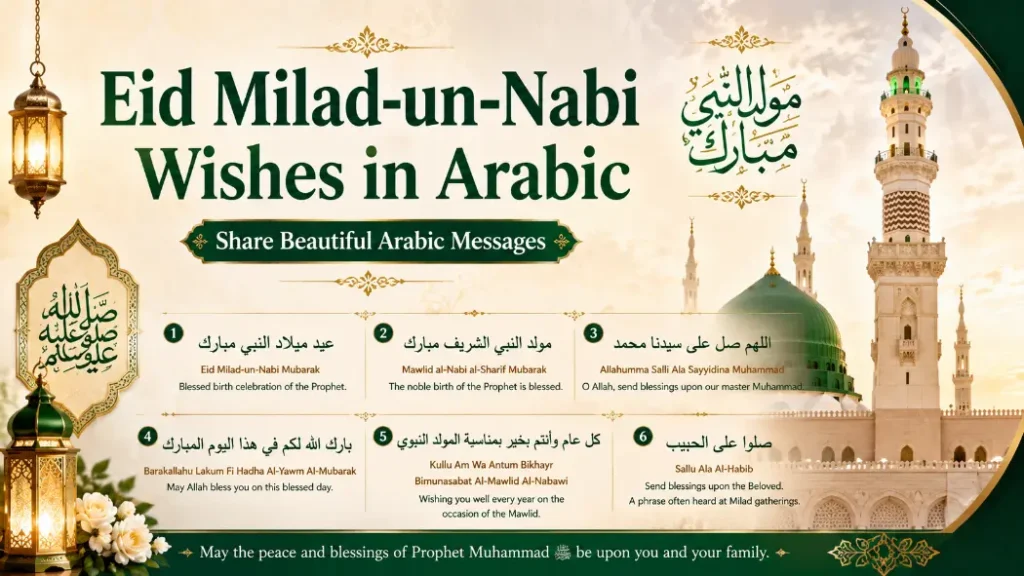
- عيد ميلاد النبي مبارك (Eid Milad-un-Nabi Mubarak) — Blessed birth celebration of the Prophet.
- مولد النبي الشريف مبارك (Mawlid al-Nabi al-Sharif Mubarak) — The noble birth of the Prophet is blessed.
- اللهم صل على سيدنا محمد (Allahumma Salli Ala Sayyidina Muhammad) — O Allah, send blessings upon our master Muhammad, an authentic salawat phrase recited especially during this month.
- بارك الله لكم في هذا اليوم المبارك (Barakallahu Lakum Fi Hadha Al-Yawm Al-Mubarak) — May Allah bless you on this blessed day.
- كل عام وأنتم بخير بمناسبة المولد النبوي (Kullu Am Wa Antum Bikhayr Bimunasabat Al-Mawlid Al-Nabawi) — Wishing you well every year on the occasion of the Mawlid.
- صلوا على الحبيب (Sallu Ala Al-Habib) — Send blessings upon the Beloved, a phrase often heard at Milad gatherings.
Eid Milad-un-Nabi Wishes in Urdu
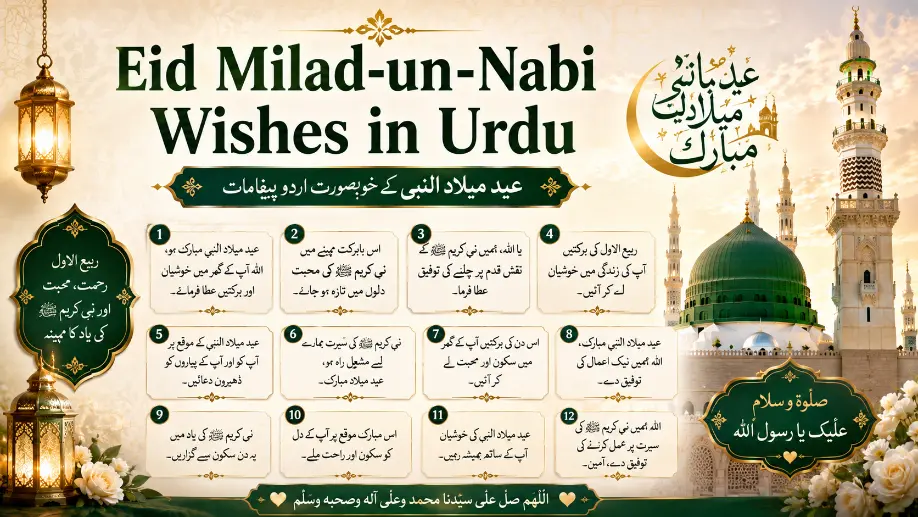
- عید میلاد النبی مبارک ہو، اللہ آپ کے گھر میں خوشیاں اور برکتیں عطا فرمائے۔
- اس بابرکت مہینے میں نبی کریم ﷺ کی محبت دلوں میں تازہ ہو جائے۔
- یا اللہ، ہمیں نبی کریم ﷺ کے نقشِ قدم پر چلنے کی توفیق عطا فرما۔
- ربیع الاول کی برکتیں آپ کی زندگی میں خوشیاں لے کر آئیں۔
- عید میلاد النبی کے موقع پر آپ کو اور آپ کے پیاروں کو ڈھیروں دعائیں۔
- نبی کریم ﷺ کی سیرت ہمارے لیے مشعلِ راہ ہو، عید میلاد مبارک۔
- اس دن کی برکتیں آپ کے گھر میں سکون اور محبت لے کر آئیں۔
- عید میلاد النبی مبارک، اللہ ہمیں نیک اعمال کی توفیق دے۔
- نبی کریم ﷺ کی یاد میں یہ دن سکون سے گزاریں۔
- اس مبارک موقع پر آپ کے دل کو سکون اور راحت ملے۔
- عید میلاد النبی کی خوشیاں آپ کے ساتھ ہمیشہ رہیں۔
- اللہ ہمیں نبی کریم ﷺ کی سیرت پر عمل کرنے کی توفیق دے، آمین۔
What Is Eid Milad-un-Nabi?
Eid Milad-un-Nabi refers to the occasion many Muslims observe to remember the birth of Prophet Muhammad ﷺ. It is widely observed on 12 Rabi ul Awwal, the third month of the Islamic Hijri calendar, in many Muslim communities, although historical sources differ on the exact birth date.
The occasion is also known as Mawlid al-Nabi, or simply Mawlid, particularly in Arabic-speaking regions. Depending on the community, it may involve gatherings, recitation, charity, remembrance, or quiet personal reflection.
When Is Eid Milad-un-Nabi 2026?
Because Islamic months begin according to moon sighting, the exact Gregorian date of Eid Milad-un-Nabi varies by country and by the religious authority a community follows. For 2026, 12 Rabi ul Awwal is currently expected to fall on 25 August 2026 in Pakistan, Saudi Arabia, and countries following the same moon-sighting calendar, with some South Asian sources citing 26 August 2026 as a possibility depending on local sighting announcements. As with every Islamic date, this is an estimate until confirmed by moon sighting closer to the date, so it is worth checking your local mosque or Islamic authority for the confirmed day in your region.
What Does Rabi ul Awwal Mean?
Rabi ul Awwal is the third month of the Islamic Hijri calendar. The word “Rabi” is generally translated as spring, and “Awwal” means first, giving the month a meaning close to “the first spring.” This name has historical roots tied to the Arabian calendar of the time rather than a fixed connection to the spring season everywhere it is observed today, since the Islamic calendar is lunar and shifts across the seasons over the years.
Birth of Prophet Muhammad ﷺ
Prophet Muhammad ﷺ was born in Makkah, an event traditionally associated with the Year of the Elephant, commonly cited as around 570 CE. Many Muslims observe his birth on the 12th of Rabi ul Awwal, a date widely cited and traditionally marked across much of the Muslim world. It is worth noting that classical historical sources do show some variation regarding the exact date within the month, and this is acknowledged within Islamic scholarship rather than treated as a settled historical fact beyond dispute.
He was born into the Banu Hashim clan of the Quraysh, a prominent Arab community in Makkah. His father, Abdullah, passed away before his birth, and according to widely cited biographical accounts, he was raised first by his mother, Aminah, then by his grandfather, Abdul Muttalib, and later by his uncle, Abu Talib after being orphaned at a young age.
Why Is Rabi ul Awwal Important?
Rabi ul Awwal holds significance for many Muslims primarily because of its connection to the Prophet’s ﷺ birth. Some historical accounts also associate his passing with this same month, which adds further reflection for many believers during this period.
Because of these associations, many Muslims treat the month with added reverence, using the time to read about the Prophet’s life, attend gatherings that recount his character, and increase personal remembrance and salawat.
Why Do Muslims Remember the Prophet ﷺ During This Occasion?
At the center of this occasion is reflection on the Prophet’s ﷺ character, teachings, and the example he set. Many Muslims use this time to revisit his mercy, patience, honesty, and treatment of others, and to consider how these qualities can shape their own daily lives.
Some devotees, particularly within certain Sufi and South Asian traditions, refer to this occasion with deep affection using phrases like “the Eid of Eids.” This reflects how meaningful the day is within those communities specifically, rather than a description accepted by all Muslims universally.
How Is Eid Milad-un-Nabi Observed?
Muslims differ in how they view and observe this occasion, and both approaches come from genuine respect for the Prophet ﷺ.
Many communities mark the occasion through:
- Gatherings where the Prophet’s life and character are recounted
- Recitation of Naat and salawat in his praise
- Charity and distribution of food to family, neighbors, and those in need
- Educational talks and lectures on his teachings
Other Muslims do not observe Mawlid as an annual religious celebration. Instead, they focus on following the Prophet’s ﷺ example and teachings consistently throughout the year, viewing daily practice as the more central form of remembrance. These different approaches reflect differing interpretations and traditions within Muslim communities.
Eid Milad-un-Nabi Around the World
Observance of this occasion varies by community, region, and religious tradition, and the examples below reflect common practices in some communities rather than a single practice followed by every Muslim in these countries.
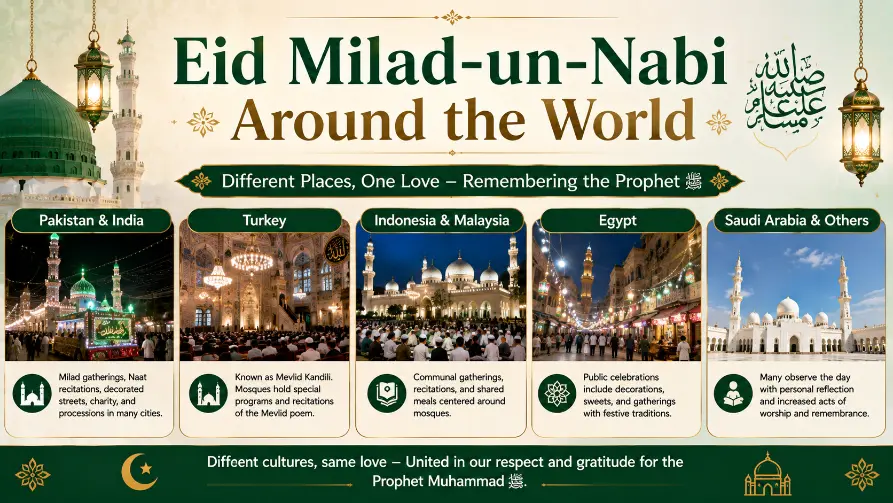
- In Pakistan and India, many communities hold gatherings, decorate homes and streets, recite Naat, distribute food, and in some cities organize public processions.
- In Turkey, the occasion is known as Mevlid Kandili, and many mosques hold special programs and recitations of the Mevlid poem on this night.
- In Indonesia and Malaysia, communal gatherings, recitations, and shared meals are common in many local communities, often centered around mosques.
- In other regions, including parts of Saudi Arabia, many Muslims mark the day with personal reflection rather than organized public events, in line with differing scholarly views in those communities.
Common Arabic Terms Related to Mawlid
- مولد النبي (Mawlid al-Nabi) — literally “the birth of the Prophet,” the formal Arabic name for this occasion.
- ميلاد (Milad) — means “birth,” often used interchangeably with Mawlid, especially in South Asian communities.
- ربيع الأول (Rabi al-Awwal) — the Arabic name of the month associated with the Prophet’s birth.
- صلى الله عليه وسلم (Sallallahu Alayhi Wasallam) — “may the peace and blessings of Allah be upon him,” said after mentioning the Prophet ﷺ, often shortened to the symbol ﷺ.
- الحبيب (Al-Habib) — “the Beloved,” an affectionate title used for the Prophet ﷺ in many devotional traditions.
Sources & Further Reading
This article draws on widely available Islamic historical and religious references. Where historical details are disputed among scholars, this article reflects that disagreement rather than presenting a single account as universally agreed upon. Readers seeking deeper religious guidance are encouraged to consult a qualified local scholar or Islamic institution.
- Quran.com — full Quran text with translations
- Sunnah.com — Sahih al-Bukhari, Sahih Muslim, and other major hadith collections in Arabic and English
- Britannica: Mawlid — academic overview of Mawlid history and practice
Why Trust This Guide
This guide is written and reviewed by the WishWellz team with care for accuracy, respectful wording, and genuine usefulness for readers observing this occasion. Historical and religious details are presented with appropriate caution where scholarly views differ, and the article is updated as needed to stay accurate and helpful. This content is not a substitute for guidance from a qualified Islamic scholar on matters of religious practice.
Frequently Asked Questions
What is Eid Milad-un-Nabi? Eid Milad-un-Nabi is the occasion many Muslims observe to remember the birth of Prophet Muhammad ﷺ, typically associated with the 12th of Rabi ul Awwal.
What does Eid Milad-un-Nabi mean? It means the celebration or remembrance of the Prophet’s birth, combining “Eid” (celebration), “Milad” (birth), and “un-Nabi” (of the Prophet).
When is Eid Milad-un-Nabi 2026? It is expected around late August 2026, though the exact date depends on moon sighting and can vary slightly by country.
Why is Rabi ul Awwal important? Rabi ul Awwal is significant mainly because it is widely associated with the birth of Prophet Muhammad ﷺ, and some accounts also connect it to his passing.
Is Eid Milad-un-Nabi celebrated by all Muslims? No. Many Muslims observe it through gatherings and remembrance, while others do not mark it as an annual celebration and instead focus on following the Prophet’s teachings year-round.
How do Muslims observe Eid Milad-un-Nabi? Common practices include gatherings, Naat recitation, charity, and educational talks, though observance varies widely by community and region.
What do you say on Eid Milad-un-Nabi? A simple and common message is “Eid Milad-un-Nabi Mubarak,” often paired with a short wish for peace, blessings, or reflection.
How do you wish someone Eid Milad-un-Nabi in Arabic? A common phrase is “عيد ميلاد النبي مبارك” (Eid Milad-un-Nabi Mubarak), meaning “blessed birth celebration of the Prophet.”
What is Mawlid al-Nabi? Mawlid al-Nabi is the Arabic term for the same occasion, literally meaning “the birth of the Prophet.”
What is the difference between Mawlid and Eid Milad-un-Nabi? They refer to the same occasion. Mawlid is the term more commonly used in Arabic-speaking regions, while Eid Milad-un-Nabi is more common in South Asian communities.
Final Thoughts
Eid Milad-un-Nabi brings together remembrance, reflection, and connection, whether through a shared meal, a heartfelt message, or a quiet moment of gratitude. Whichever way you and your loved ones choose to mark this occasion, the wishes above are meant to help you share something genuine and meaningful with the people around you.
For more occasion-based messages, explore our Islamic Wishes and Quotes guide or our Religious Birthday Wishes collection on WishWellz.