
Most people who say the wrong thing to someone who’s sick aren’t careless, they just don’t know what actually helps. A few common phrases sound supportive but tend to land wrong, even when they come from a caring place.
The most common mistakes when talking to someone who’s sick are minimizing their experience, comparing it to someone else’s, or unintentionally shifting the burden of communication back onto them. Knowing which phrases to avoid, and what to say instead, makes it much easier to actually show up for someone.
What should you never say to someone who’s sick? Avoid phrases like “everything happens for a reason,” “at least it’s not worse,” or “you don’t look sick.” These tend to minimize what the person is going through, even when meant kindly.
I write and check every guide on this page carefully, drawing on advice from healthcare writers, therapists, and people who’ve actually been sick and remember what helped and what didn’t.
“Everything Happens for a Reason”

This phrase can feel spiritually dismissive, especially to someone in the middle of something hard. It skips past their pain to offer a tidy explanation they didn’t ask for.
Say instead: “This is really hard, and I’m so sorry you’re going through it.”
“At Least It’s Not Worse”
Starting a sentence with “at least” often feels like you’re hunting for a silver lining instead of sitting with how they actually feel. It can come across as minimizing, even when you mean it as comfort.
Say instead: “I’m not going to pretend this is easy. I’m just here.”
“You Don’t Look Sick”
This one lands especially hard for anyone with a chronic or invisible illness. It can sound like you’re questioning whether they’re really unwell, which forces them to defend or explain something they shouldn’t have to prove.
Say instead: “How are you actually feeling today, not how you look, but how you feel?”
“You Look Great!”
For someone seriously ill, this can feel hollow or even painful, especially if they’re aware of hair loss, weight changes, or other visible effects of illness or treatment.
Say instead: Skip appearance entirely. Try, “I can see how much strength this is taking,” or simply, “I’m glad to see you.”
“What Can I Do to Help?”

This question feels kind, but it quietly puts the work back on the sick person. They now have to think of a task, decide if it’s worth asking for, and then ask. Most people won’t.
Say instead: Offer something specific. “I’m dropping off dinner Thursday” or “I’ll walk your dog this week” removes the guesswork entirely.
“I Know Exactly How You Feel”
Even if you’ve been through something similar, every illness and every person’s experience is different. This phrase can unintentionally shift focus onto your story instead of theirs.
Say instead: “I don’t know exactly what this feels like for you, but I’m here to listen.”
“Stay Positive!” or “You’ve Got This!”

Encouragement has its place, but demanding positivity can feel like pressure to perform okay when someone doesn’t feel okay. People who are sick are allowed to feel scared, angry, tired, or all three at once.
Say instead: “You don’t have to be positive for me. However you’re feeling is okay.”
Comparing Their Illness to Someone Else’s
Bringing up a story about someone else’s diagnosis, treatment, or outcome, even with good intentions, often feels like your attention has shifted away from them. It can also create fear if the other story didn’t end well.
Say instead: Ask first. “Would it help to talk about this, or would you rather talk about something else entirely?”
What Should You Say Instead of Giving Unwanted Advice?
When someone is sick, they may not want solutions or treatment suggestions. They may simply want someone to listen and understand. Before offering advice, ask, “Do you want advice, or would you rather I just listen?” This gives them control and helps you avoid saying something that feels dismissive.
Should You Give Someone Who Is Sick Space?
Yes, sometimes giving space is one of the most caring things you can do. A sick person may be tired, overwhelmed, or simply not feel like talking. Instead of repeatedly asking for updates, send a low-pressure message like, “No need to reply. I’m thinking of you and I’m here whenever you need me.” It shows that you care without making them feel obligated to respond.
What Is the Best Thing to Say to Someone Who Is Sick?
You do not need the perfect words. The best message is usually simple, honest, and focused on support. Try saying, “I’m sorry you’re going through this. I’m here for you.” Avoid trying to explain their illness, force positivity, or compare their situation with someone else’s. Sometimes listening, checking in, or offering specific help means more than any perfect phrase.
Unsolicited Advice About Treatment or Cures
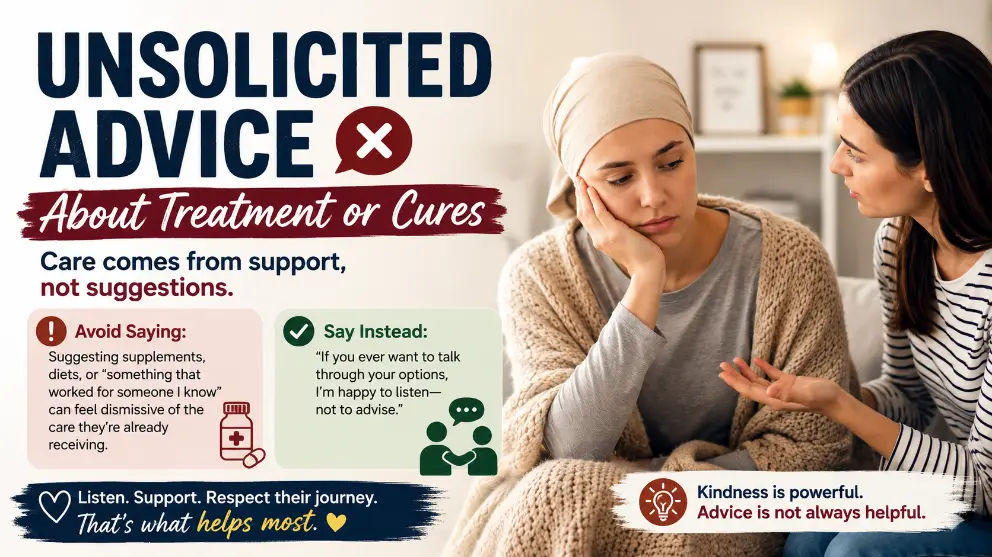
Suggesting a supplement, diet, or “something that worked for someone I know” can feel dismissive of the actual medical care they’re receiving, even when it comes from a caring place.
Say instead: “If you ever want to talk through your options, I’m happy to listen, not to advise.”
What to Say When You Don’t Know What to Say
Sometimes the most honest thing is admitting you don’t have the perfect words. That honesty usually lands better than a forced, cheerful line.
- “I don’t know what to say, but I wanted you to know I’m thinking of you.”
- “This is hard, and I’m not going to pretend otherwise. I’m here.”
- “No need to reply, I just wanted you to know I care.”
- “I’m not going anywhere, whatever this looks like.”
Quick Reference: Phrases to Avoid and What to Say Instead
| Avoid Saying | Say Instead |
|---|---|
| “Everything happens for a reason.” | “I’m so sorry you’re going through this.” |
| “At least it’s not worse.” | “I’m here, whatever this looks like.” |
| “You don’t look sick.” | “How are you actually feeling?” |
| “What can I do to help?” | “I’m bringing dinner Thursday.” |
| “I know exactly how you feel.” | “I’m here to listen.” |
| “Stay positive!” | “You don’t have to be positive for me.” |
Why Trust This Guide
Each recommendation here draws on guidance from healthcare writers, therapists, and firsthand accounts from people who’ve been seriously ill and remember exactly what helped and what didn’t. This page is not medical advice, only guidance on supportive communication.
FAQ Section
What should you never say to someone who’s sick? Avoid phrases like “everything happens for a reason,” “at least it’s not worse,” or “you don’t look sick.” These tend to minimize the person’s experience, even when well intentioned.
Why is “what can I do to help” not a good thing to say? It puts the burden back on the sick person to think of a task and ask for it, which most people won’t do. Offering something specific, like bringing a meal, is easier to accept.
Is it okay to say “you’re so strong” to someone who’s sick? Use it sparingly. It can create pressure to always appear strong. Pairing it with permission, like “you don’t have to be strong for me,” softens that pressure.
What do you say when you genuinely don’t know what to say? It’s okay to say that directly. “I don’t know what to say, but I wanted you to know I’m thinking of you” is honest and often lands better than a forced, cheerful message.
Is it wrong to compare their illness to my own experience? Even shared experiences are different for everyone. It’s better to ask if they want to talk about it rather than assuming your experience applies to theirs.
Conclusion
Most of these phrases come from a good place, they’re just not always the right ones.
This guide covered the most common things people say without realizing how they land, along with simple alternatives that focus on presence over platitudes.
When in doubt, honesty and specific offers of help will almost always land better than a cliché.